
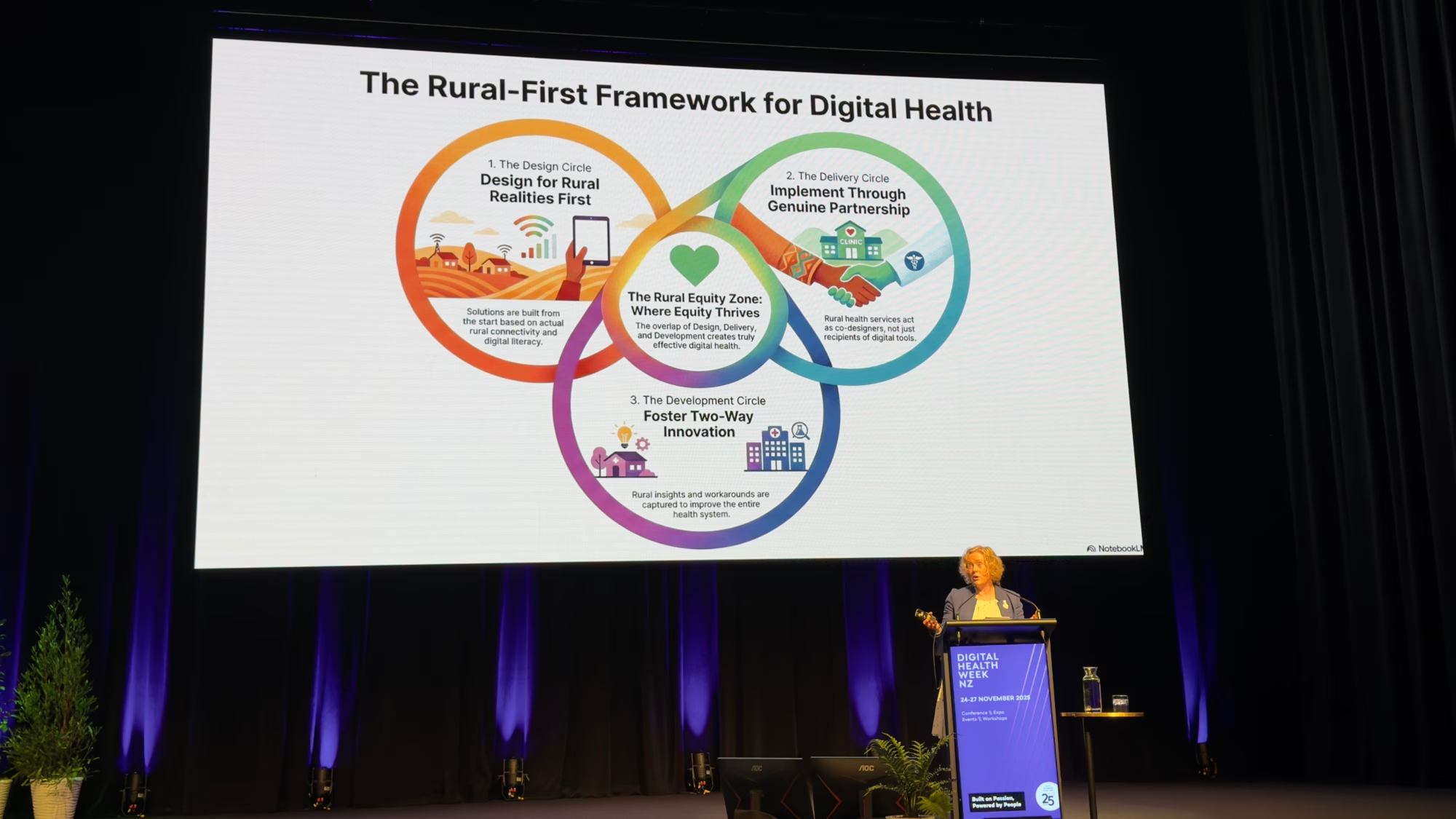
Keynote speaking
Delivering research-informed keynotes that challenge conventional workforce thinking
Her presentations draw on her doctoral research, operational leadership experience, and with a social work lens that consistently asks: who is this system designed for, and who is missing from the conversation? She is known for making audiences think differently, not through provocation for its own sake, but through carefully constructed arguments that reveal patterns most people haven’t noticed.
Jane brings warmth, clarity and intellectual rigour to the stage. She grounds her challenge in evidence and leaves audiences with practical frameworks they can apply immediately.
Common keynote themes
All topics can be tailored to specific audiences, sectors and contexts. Jane regularly adapts her content for health sector audiences, education and research communities, government and policy forums, and cross-sector leadership events.
Recruit and Retain
Sustainable workforce solutions emerge when organisations move beyond transactional recruitment to create environments where people experience genuine connection and belonging.
This requires recognising that retention isn’t about keeping people in roles—it’s about creating conditions where professionals thrive through meaningful growth pathways, safe and supported practice, and authentic relationships with their communities. The most successful organisations understand that recruitment begins with current team members who become advocates, and retention flourishes when people feel valued not just for their technical skills, but for their whole selves.
By fostering environments where professionals can see their future selves flourishing, organisations transform from employers into communities where people choose to invest their careers and lives.
Rural Innovation
(From the Edges In)
True innovation doesn’t emerge from centres of power but from the edges where necessity drives creativity and constraints spark ingenuity.
Rural and remote communities aren’t places waiting for solutions to arrive—they’re laboratories of transformation where professionals develop adaptive expertise, communities co-create services, and distance becomes an asset rather than a deficit. When we flip the narrative from “making do with less” to “leading with difference,” we discover that the most groundbreaking solutions come from those who understand that innovation isn’t about having the latest technology or biggest budgets—it’s about seeing possibilities where others see problems.
The future belongs to those who recognise that the periphery is actually the leading edge, and who can hold the paradox that limitation and liberation often arrive hand in hand.
Better Together
Genuine collaboration transcends professional boundaries when we acknowledge that no single discipline, sector, or perspective holds all the answers. This means dismantling the hierarchies and silos that fragment our efforts, replacing them with interconnected networks where diverse expertise is equally valued and collective wisdom drives decisions.
The shift from “working alongside” to “working as one” requires conscious delegation of ego, deliberate cultivation of trust, and courage to share power—while simultaneously maintaining the distinct professional expertise that makes collaboration valuable. When organisations embrace true interprofessional practice—where a social worker’s insights carry the same weight as a CEO’s strategy—they unlock exponential impact that no individual or profession could achieve alone.
The deepest collaboration emerges when we learn to hold the tension between unity and diversity, understanding that our differences are precisely what make us stronger together.
Inclusive Design
Authentic inclusion begins with recognising that our default systems were designed by and for a narrow segment of society, systematically excluding those at the margins.
True inclusive design doesn’t retrofit accessibility as an afterthought but centres the experiences of those furthest from power, understanding that when we design for the edges, we create solutions that work better for everyone. This requires shifting from “accommodating difference” to “designing from difference,” where whānau voices shape services from conception, barriers are dismantled before they’re built, and equity isn’t a goal but a starting point.
The most transformative organisations understand that inclusive design isn’t about opening doors—it’s about questioning why we built walls in the first place.

Wendy Elwood, Runanga
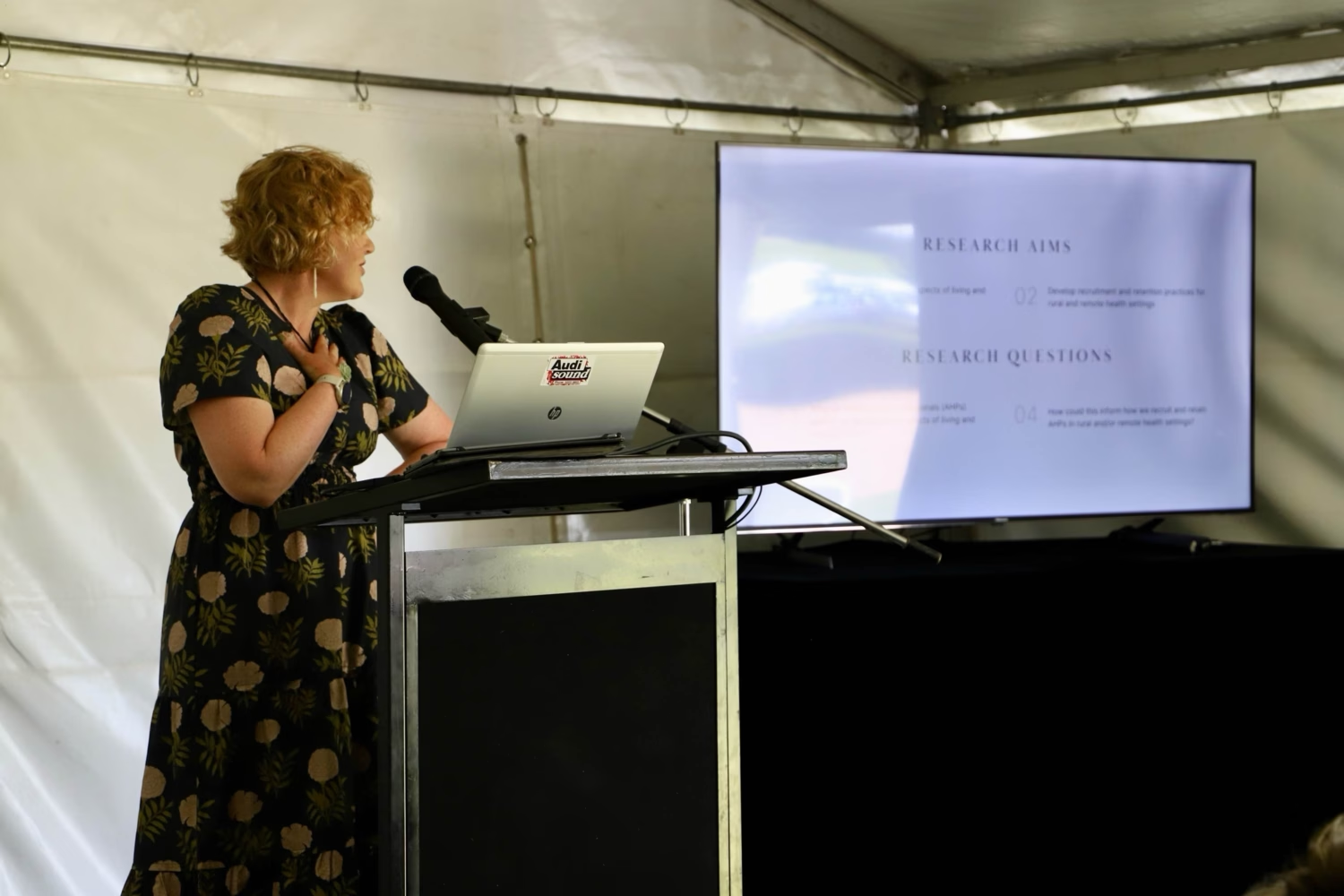
Format & delivery
Keynote presentations
15 to 45 minutes, adaptable to conference programmes
Workshops
Half-day or full-day interactive sessions with practical tools and outputs
Panel participation
As panellist or moderator on workforce, rural health and equity topics
Virtual presentations
For national and international audiences
Podcast and media interviews
Available for commentary on rural health, workforce and allied health topics
FAQ’s
Connect with meDoes Jane travel internationally?
Jane is based in Aotearoa New Zealand and regularly speaks across the country. She is available for engagements in Australia and considers international opportunities on a case-by-case basis. Virtual presentations are available for any location.
Can topics be tailored to our audience?
Absolutely. Jane works with organisers to ensure content is relevant to the specific audience, sector and context. She’s spoken to digital health specialists, rural health practitioners, allied health leaders, policymakers and cross-sector audiences — and adapts her approach for each.
“Jane has a rare ability to take complex ideas and make them feel not just accessible, but actionable. She doesn't talk at people – she draws them in, asks the right questions, and creates space for honest conversation. She combines deep expertise with a practical, no-nonsense warmth that makes even intimidating topics feel achievable. She's one of those speakers who makes you leave a session feeling like you've gained both a toolkit and a cheerleader. I'd book her again without hesitation.”
Academic Consulting