
From Research to Action: Recommendations for Strengthening Rural Allied Health
My doctoral research exploring rural Allied Health recruitment and retention wasn’t just about understanding what matters—it was about creating meaningful change. The themes that emerged from interviewing 18 AHPs across rural Aotearoa provide a foundation for practical recommendations that can transform how we approach rural Allied Health workforces.
In this post, I’ll introduce the key recommendations that emerged from my research, organised by who needs to take action. These aren’t theoretical suggestions—they’re grounded in the lived experiences of rural AHPs and informed by what’s working (and what isn’t) across our rural communities.
Sharing these recommendations is core to my values; respecting and uplifting participants’ voices, and making the knowledge available to contribute to improving health access and outcomes in rural settings.
A Network of Influence
Rural Allied Health recruitment and retention isn’t the responsibility of any single entity. It requires coordinated effort from multiple stakeholders:
⚡Key Influencers in the Recruitment and Retention Network⚡
- Line Managers – Those directly supervising rural AHPs
- Organisations – Health providers employing rural AHPs
- Recruiters – Those responsible for attracting new staff
- Professional Associations & Registering Bodies – Groups governing professional practice
- Tertiary Education Providers – Institutions training future AHPs
Each of these entities plays a significant role in supporting, connecting, and protecting those working in rural communities to deliver services that are fit for purpose.
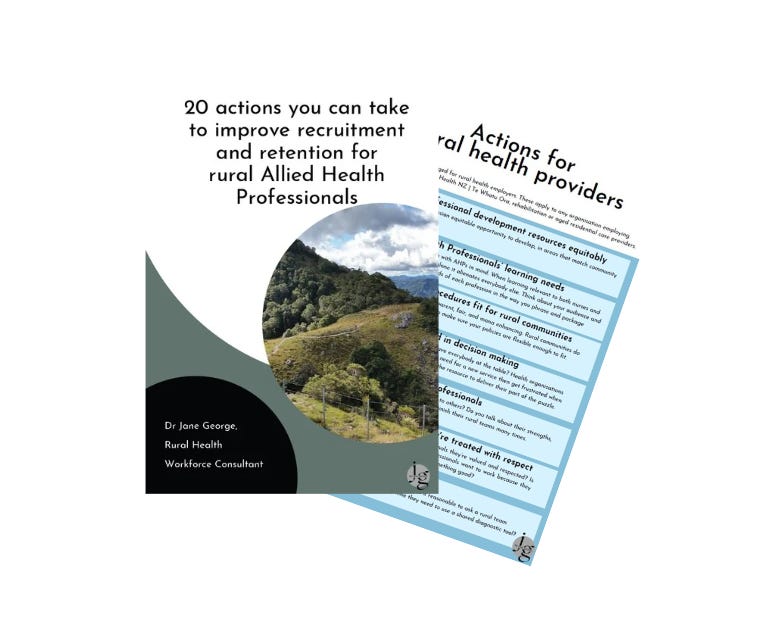
Starting with Equal (If You Must), Aiming for Equitable: Recommendations for Organisations
Organisations employing rural AHPs need to consider how their systems, processes, and resource allocation decisions impact this workforce.
Key recommendations include:
Apportioning resources equitably
- Match investment to each workforce with population benefits in mind
- Address the higher costs rural practitioners face in accessing training
- Ensure equitable access to technology and equipment
Demonstrating AHPs’ learning needs are valued
- Create, brand, and promote learning with each workforce in mind
- Develop professional development pathways specific to rural practice
- Recognise the value of generalist knowledge and skills
Developing fit-for-purpose policies
- Ensure policies are visible, transparent, accessible, and fair
- Adapt rules to accommodate rural realities
- Review policies regularly for rural applicability
Becoming allies for rural AHPs
- Challenge urban-centric assumptions and biases
- Represent rural colleagues and services positively
- Celebrate rural innovation and practice adaptations
Ensuring inclusive decision-making
- Include rural perspectives in service planning
- Involve AHPs in decisions about service models and roles
- Check assumptions about professional scopes and boundaries
Recognising Context: Recommendations for Line Managers
Line managers have perhaps the most direct influence on the day-to-day experience of rural AHPs.
Key recommendations include:
Networking and knowing your community
- Become a resource about local communities for your staff
- Connect new team members with community groups and activities
- Understand what resources exist beyond the health system
Finding balance and role-modelling boundaries
- Create micro-moments that build safety and belonging
- Lean into flexibility rather than rigid rule application
- Support skills for navigating dual relationships in small communities
Spending time “in their shoes”
- Make a regular practice of working alongside remote team members
- Experience the travel, technology limitations, and practice realities
- Use these insights to advocate for appropriate resources
Building trust
- Assume good intent from the outset
- Promote reciprocal learning relationships (tuakana-teina)
- Demonstrate support through actions, not just words
Enhancing leadership attributes
- Invest in ongoing leadership development
- Build skills in supporting distributed teams
- Learn about rural practice contexts and challenges
Moving Faster and Smarter: Recommendations for Recruiters
Recruitment processes often provide the first impression of an organisation and can significantly influence candidates’ decisions.
Key recommendations include:
Creating a positive first impression
- Treat every candidate as though they will solve all recruitment needs
- Respond quickly and personally to applicants
- Ensure messaging about roles is honest and realistic
Learning about Allied Health
- Understand the various professions and their scopes
- Know what matters to different professional groups
- Build relationships with professional bodies
Creating opportunities to connect
- Coordinate start dates for multiple new hires where possible
- Link candidates with community connections beyond health
- Support partners and families in finding their place
Working with role lifecycles
- Collect and analyse data on typical role durations
- Plan proactively for predictable transitions
- Support knowledge transfer between incoming and outgoing staff
Extended Scopes of Practice: Recommendations for Professional Associations and Registering Bodies
Professional associations and registering bodies play a crucial role in defining scopes of practice and creating development pathways.
The key recommendation is to:
Recognise and endorse rural scopes of practice
- Establish mechanisms to recognise rural practice as a legitimate specialty
- Create pathways for endorsement of rural generalist practitioners
- Draw on existing models from Australia and elsewhere
- Advocate for the unique skills and knowledge required in rural practice
Aligning with Context: Recommendations for Tertiary Education Providers
Educational institutions shape the future workforce and can significantly influence graduates’ willingness to consider rural practice.
Key recommendations include:
Exploring alternatives to city-based training
- Develop ways to connect knowledge, skills, and qualifications with rurally located learners
- Create blended learning models that minimise time away from rural communities
- Partner with rural health providers to deliver education locally
Developing rural generalist pathways
- Create specific education programs for rural generalist practice
- Incorporate rural contexts into core curriculum
- Build interprofessional learning opportunities reflecting rural team structures
The Path Forward
These recommendations aren’t exhaustive, nor are they one-size-fits-all solutions. But they represent a starting point for meaningful change based on what rural AHPs themselves have identified as important.
In the coming posts, I’ll dive deeper into each set of recommendations, exploring practical implementation strategies and examples of what’s working well across rural Aotearoa.
The core message is clear: strengthening rural Allied Health workforces requires coordinated action across multiple fronts. But with thoughtful implementation of these recommendations, we can create conditions where rural AHPs can thrive – and rural communities can access the full spectrum of health services they deserve.