
Understanding What Matters: Rural Allied Health Professionals in Aotearoa
The Research Journey: From Rural Challenges to Evidence-Based Solutions
My research journey started with a real-world problem. In 2016, when I joined the West Coast DHB leadership team, I witnessed firsthand the struggle to recruit and retain Allied Health Professionals in rural settings. I saw talented practitioners stretched thin, covering vast geographical areas with minimal resources, while their professional growth opportunities were often redirected to other workforces.
The question that launched my doctoral research was simple but significant: What do Allied Health Professionals identify as the attractive aspects of living and working rurally?
Allied – Insights for a Thriving Rural Workforce is a reader-supported publication. To receive new posts and support my work, consider becoming a free or paid subscriber.Subscribe
When I started looking for Allied Health Professionals to interview about their rural experiences, I was blown away by the response. Forty-five people from across Aotearoa put their hands up to share their stories! From this enthusiastic group, I spoke with 18 practitioners who brought wonderfully diverse perspectives to the research.
They represented 10 different Allied Health professions – from Physiotherapists to Music Therapists, Social Workers to Pharmacists. I deliberately sought this variety because I knew that what matters to a Psychologist might be quite different from what matters to an Occupational Therapist. Just as every rural community is unique, each profession brings its own lens to rural practice.
My participants ranged in age from 23 to 63 years, bringing perspectives from early career excitement to deep practice wisdom. While they were all women (which reflects much of our Allied Health workforce), they came from richly diverse cultural backgrounds including Māori, Samoan, Pākehā/NZ European and beyond the Pacific.
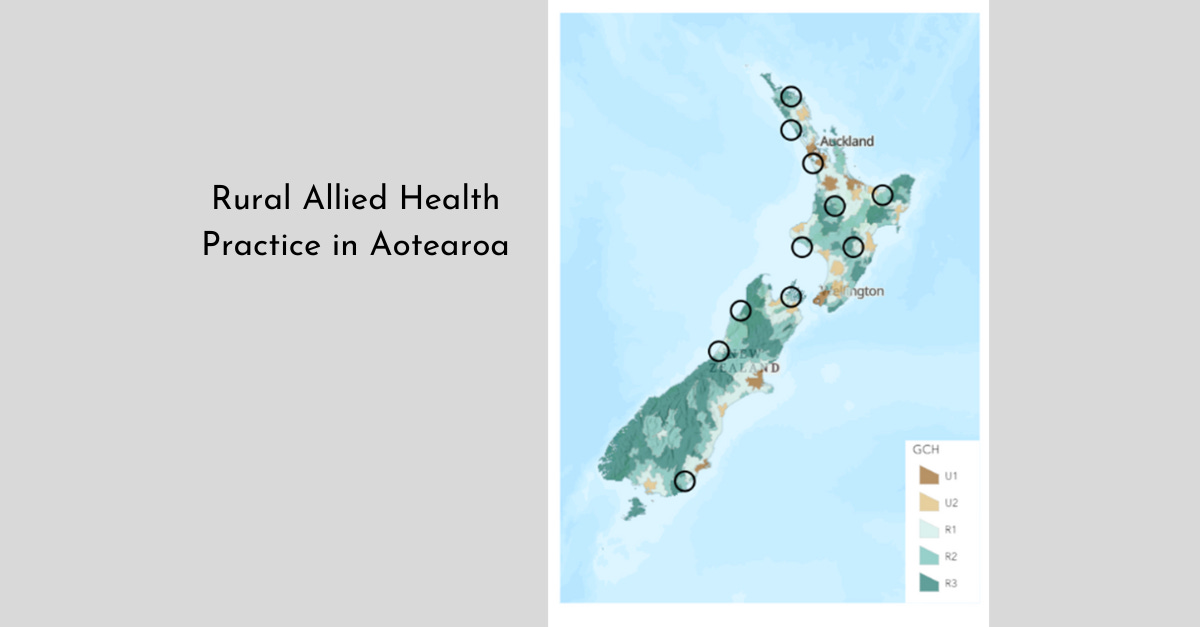
Most importantly, these practitioners came from rural communities spread right across the motu. From Northland to Southland, East Cape to the West Coast, they shared experiences of delivering Allied Health services in communities of all sizes and levels of remoteness.
A Gap in the Knowledge
Surprisingly, I found very little research specific to rural Allied Health recruitment and retention in Aotearoa. While there was plenty about doctors and nurses working rurally, Allied Health perspectives were largely missing from the picture.
I used a research approach called Interpretive Description – designed specifically for exploring healthcare practice challenges. This method helped me to:
- Draw insights from practitioners’ real-world experiences
- Understand the rural context deeply
- Create practical recommendations for change
Through in-depth interviews, I explored their career journeys, what attracted them to rural practice, and what keeps them there. The conversations were rich with insights about connection, safety, professional growth and that essential sense of ‘fit’.
What I Discovered: Three Key Themes
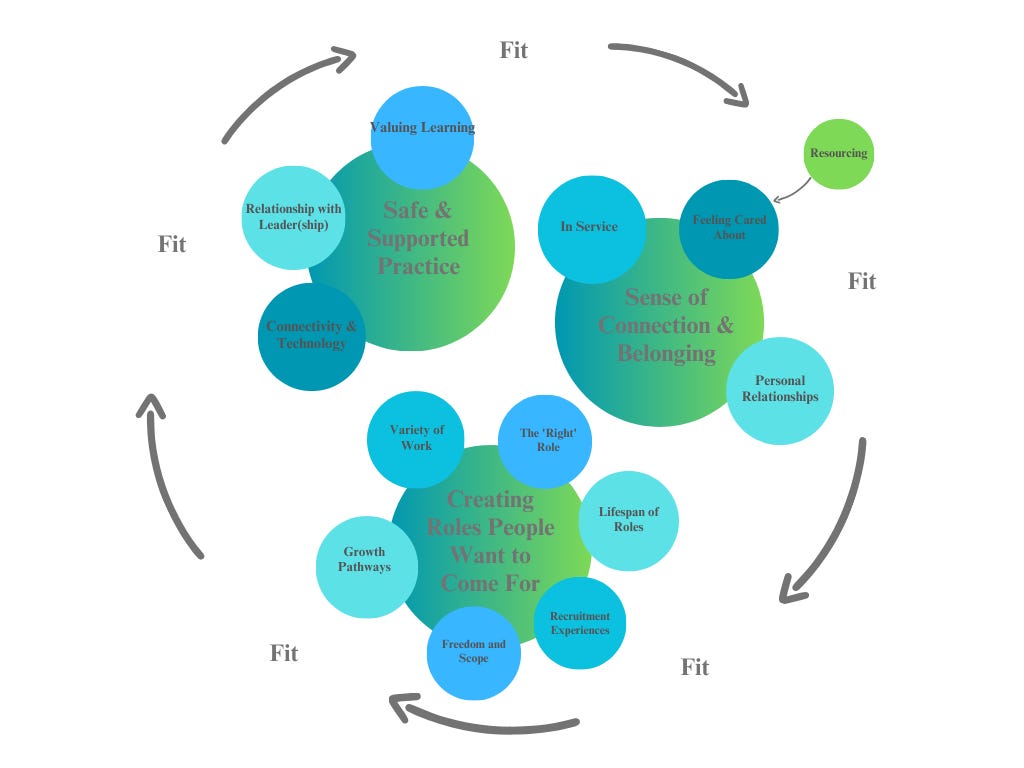
My doctoral research uncovered three interconnected themes that determine whether Allied Health Professionals (AHPs) thrive in rural practice:
1️⃣ Sense of Connection & Belonging
When AHPs feel genuinely connected to their teams, communities, and environment, they’re more likely to stay. One participant captured this perfectly: “I’m thankful to be here… it’s good to know you’re where you’re supposed to be.”
This sense of connection manifests through:
- Feeling Cared About – Experiencing genuine concern for wellbeing
- Personal Relationships – Building meaningful connections beyond work
- Being In Service – Contributing to community beyond the clinical role
2️⃣ Safe & Supported Practice
Rural AHPs need the right tools, technology, and professional support to deliver quality care. Having leaders who understand rural realities is crucial – like one manager who spent a day in a remote clinic and finally understood why her team needed different resourcing.
Key components include:
- Connectivity & Technology – Having the tools to work effectively
- Valuing Learning – Access to meaningful professional development
- Relationship with Leader(ship) – Supportive connections despite distance
3️⃣ Creating Roles People Want to Come For
Rural roles need to be genuinely appealing – offering variety, growth opportunities, and professional autonomy. As one participant noted: “I want to stay rural because of all the unique things that makes rural practice what it is.”
This theme includes:
- Recruitment Experiences – First impressions that shape everything after
- Variety of Work – The engaging breadth of rural practice
- Growth Pathways – Seeing a future without leaving rural communities
- Freedom & Scope – Autonomy and breadth of practice
- Lifespan of Roles – Understanding natural cycles of employment
- The Right Role – Alignment with personal circumstances and values
The Missing Piece: FIT
Weaving through all these themes is the concept of ‘Fit’ – that intangible sense that you’re in the right place, with the right people, doing meaningful work that aligns with your values.
What exactly is ‘Fit’? It’s not just about being born rural (though that can help). Fit is that profound sense that you’re in the right space, at the right time, with the right people. As one participant shared: “It’s like my dream job… there’s greater life satisfaction.”
When AHPs experience this sense of fit, they’re more likely to stay and thrive. One participant noted: “I feel like I owe people something and that’s quite a motivating factor… I also feel like I fit there.”
Why This Matters
The real test of this research isn’t in engagement or academic citations—it’s in whether rural communities gain better access to Allied Health services.
Behind this question was a deeper purpose: to ensure rural communities aren’t left behind when it comes to accessing the full spectrum of healthcare they deserve.
In my next post, I’ll dive deeper into the first theme – Sense of Connection and Belonging – and explore what it really means for rural Allied Health Professionals to feel connected to their work, their communities, and each other.